SLM 3D printing technology

3D printing process through SLM technology

This is the most well-known technology for printing metal items, its name comes from Selective Laser Melting (SLM) and it is a powder bed printing technique. The SLM technology casts the metallic powder, layer by layer, in an inert atmosphere chamber. During the printing process, a laser completely melts the alloy metal powder deposited on the surface and bonds it to the previous layers of the model. In order for this process to be effective, the alloy must have a low carbon content.

Just like with other 3D printing technologies, it starts with the creation of a print Gcode with the process parameters. In SLM technology, the most important things are: layer thickness, speed, journey distance, and laser or inert gas flow exposure time.
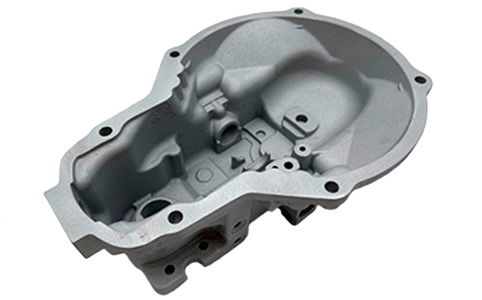
Technical specifications of SLM technology

Types

  • Single laser
  • Multi laser

Features

  • Printed item density> 99%
  • Tolerance: 0.2mm
  • Print volume: 250x250x300mm
  • 70-micron laser beam

Technical advantages of SLM technology

Unlike electron beam melting, laser melting (SLM) allows fresh, unmelted powder to be removed from the internal channels of the part without these being blocked by the powder.

Possibility of hybridising metal 3D printing on a machined block to reduce costs.

Open machine parameters to enable the development of more materials.

What does the powder bed melting process include?

The SLM printer deposits a fine layer of metallic powder over a metal base which will be selectively melted by a laser in accordance with the print code previously prepared by the software. The process is then repeated, melting layers over other layers to build the part and its support. Finally, the part is left surrounded by the metallic powder that has not been processed and which should be screened to be reused on the next print.

Instant quote

If you require further information or advice about our SLM technology 3D printing services, please contact us. One of our specialists will respond as soon as possible.

Ask for a free quote

    3D printing process through SLM technology

    Step 1: 3D file

    Send us your 3D file ready for printing. If you do not have the file, send us the piece and we will generate the CAD file.

    If you need a design from scratch, our designers will be happy to make proposals.

    Step 2: 3D printing

    We generate the process file adapted to the technology and material to be used in the manufacture of your part.

    We prepare and condition the printer to ensure optimal quality.

    Step 3: Cleaning and post-processing

    This step is key to meeting your requirements and one in which we are highly specialised.

    The removal of printing supports, heat treatments and surface finishing (blasting, polishing, machining) are the most common post-processing steps.

    Applications of SLM technology

    3D metal printing with SLM has the potential to be used in technical sectors that demand high performing parts, such as the aerospace, automobile, biomedicine, and tooling sectors.

    Cast prototypes

    Lightened structural components

    Tooling

    Tools

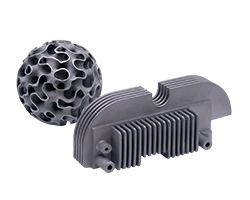
    Heat exchangers

    Mould inserts with conformal cooling

    Printing machinery used in SLM technology

    SELECTIVE LASER MELTING (SLM)

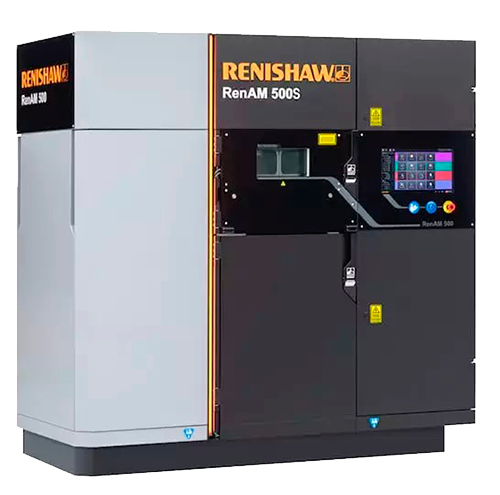
    Renishaw AM500S Flex

    The Renishaw AM500S Flex is made for industry 4.0 process methods with optical system control and system processes.

    Its 500 W laser enables exceptional precision for manufacturing components with > 99.9% density, maximum strength and ductility.

    Workload: The construction volume is 250x250x350mm

    Flexibility: The versatility of its design and the possibility of generating new process parameters make this equipment ideal for working with many different materials.

    SLM 3D printing

    We offer this service for the following materials. Take a look and decide which one best suits your needs.

    3D printing in steel

    3D printing in aluminium

    3D printing in Inconel

    3D printing in copper

    Complementary services to the 3D printing process

    Design and
    engineering

    3D scanning
    of parts

    Post-processing