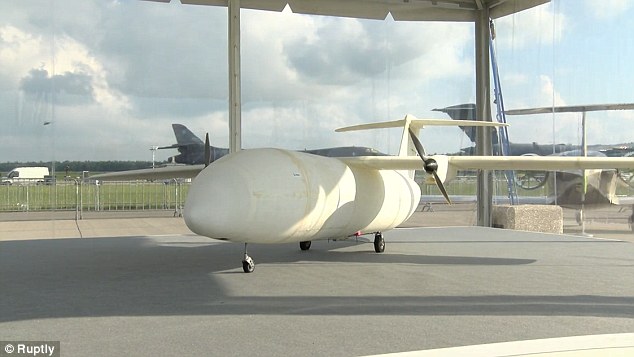
Additive manufacturing, better known as 3D printing, has revolutionised various industrial sectors, including aviation and aerospace. These two sectors are characterised by precision, reliability and weight optimisation. Throughout this article, we will explore why this technology is so beneficial in these sectors and how it is expected to continue advancing over time.
Advantages of additive manufacturing in aviation and the aerospace industry
One of the main advantages of additive manufacturing in these sectors is its ability to produce highly complex parts in terms of geometry, parts that would be impossible to produce using traditional methods. In addition, this technology allows for lighter, stronger and more efficient finishes. In the case of aviation, these characteristics are particularly important, as every additional kilogram of weight can increase fuel consumption.
On the other hand, 3D printing facilitates the manufacture of customised, on-demand parts, reducing aircraft downtime and improving operational efficiency. For aircraft manufacturers and their spare parts suppliers, the use of this technology helps streamline the production chain, as there is no need to manufacture expensive moulds or specialised tools.
Another significant benefit is the ability to optimise parts to improve their performance. By being able to manufacture lighter and stronger components, their efficiency can be improved, which is crucial in the development of aircraft and satellite engines.
Current applications in aviation and the aerospace industry
Today, companies such as Boeing have used additive manufacturing to produce more than 60,000 parts for their aircraft, ranging from cable supports to seat frames and oxygen systems.
For its part, NASA has been experimenting with 3D printing to manufacture parts for its rockets and spacecraft. In 2016, they printed a rocket engine using this technology, demonstrating the reliability of additive manufacturing.
Airbus and Rolls-Royce are two other companies investing in 3D printing, using it to manufacture aircraft parts such as engine components. This demonstrates that additive manufacturing is capable of producing complex metal parts that would not be possible to make using traditional methods.
Challenges and obstacles
Despite the benefits that additive manufacturing offers for the development of parts for aviation and the aerospace industry, there are a number of limitations that must be considered. The main one is certification, as aviation authorities require parts to meet strict safety and reliability standards. Although additive manufacturing is advancing rapidly, certification processes are not evolving at the same pace.
On the other hand, there is the problem of production volume. While additive manufacturing is excellent for producing customised parts, it is limited in terms of profitability when it comes to large-scale production. In mass production, many companies in these sectors, which have high production volumes, continue to rely on traditional methods. However, as time goes by and 3D printing evolves, it will become increasingly accessible and its costs will decrease, allowing for its large-scale adoption.
The future of additive manufacturing in the aeronautical and aerospace industry
The future of additive manufacturing in these two sectors is promising. As technology continues to advance, new applications are expected to emerge that are capable of producing larger and more complex parts, and even entire aerospace vehicles. Predictions indicate that 3D printing will be key in creating more efficient and sustainable aircraft, with lighter and optimised designs that will reduce carbon emissions.
Another advance in additive manufacturing will be the ability of manufacturers and suppliers to produce parts only when they are needed, rather than maintaining large inventories of spare parts. This will reduce both storage costs and lead times. It will also facilitate the production of components in remote locations, such as space stations or bases on the Moon or Mars.
Advances in materials technology, combined with progress in additive manufacturing, could enable the development of parts capable of withstanding space radiation, temperatures and other extreme conditions. This would be essential for creating spacecraft and space stations with customised structures adapted to space conditions.
Conclusion
Additive manufacturing is proving to be transformative for the aerospace and aviation industry. It offers new ways to design and manufacture parts with complex geometries, using optimised materials that reduce weight. Although there are limitations, the future of this technology is bright, with the potential to revolutionise the manufacture of aircraft, engines and space vehicles.