3D printing in aluminium

Additive manufacturing process in aluminium

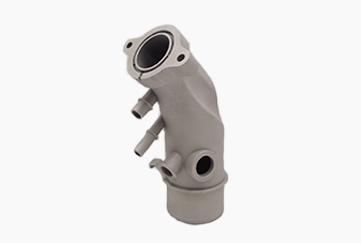
3D printing with aluminium is done through Selective Laser Melting (SLM). This technology melts 30-micron layers of aluminium into powder thanks to a 400 W laser. The difficulty in welding aluminium means that it is essential to have good knowledge about this printing technique and the material itself to guarantee the best quality and repeatability of the entire production process.

To create quality prints with aluminium, it is essential to have good know-how of SLM technology and material. Factors such as layer thickness, the number and geometrics of the manufacture supports, and the printer parameterisation are key factors.

Technical specifications of Aluminium

Types

  • AISi10Mg

Features

  • Low density: 2.7 g/cm3
  • Tensile strength: 400 MPa
  • Excellent electrical conductivity
  • High heat conductivity: 190 W/mK

Benefits

The high mechanical properties per mass unit, combined with topologically optimised designs makes that this material can be used for extremely light designs. Reduced tooling costs of short-runs in aluminium casting or injection processes. High corrosion resistance, which can be increased when anodized.

Surface finish in 3D printed aluminium parts

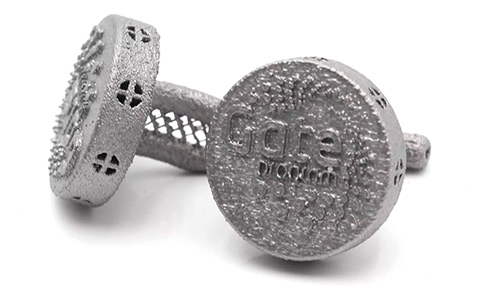
Items printed with aluminium using SLM have some excellent properties. However, the roughness of their surface can be more than other materials. This finish is suitable for most uses, but if you need another kind of finish, such as a polished finish, do not hesitate to get in touch with our team who will gladly address your specific needs.

Aluminium 3D printing process

Step 1: 3D file

Send us your 3D file ready for printing. If you do not have the file, send us the piece and we will generate the CAD file.

If you need a design from scratch, our designers will be happy to make proposals.

Step 2: 3D printing

We generate the process file adapted to the technology and material to be used in the manufacture of your part.

We prepare and condition the printer to ensure optimal quality.

Step 3: Cleaning and post-processing

This step is key to meeting your requirements and one in which we are highly specialised.

The removal of printing supports, heat treatments and surface finishing (blasting, polishing, machining) are the most common post-processing steps.

Applications of 3D printed aluminium

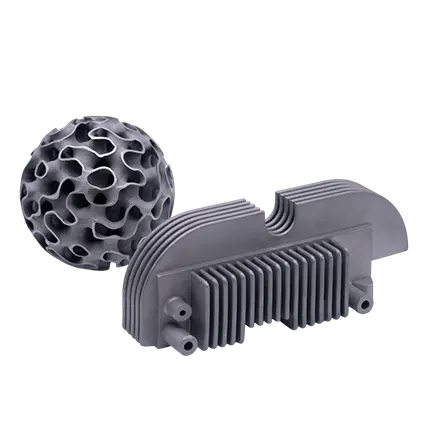
One of the most common uses of aluminium printed parts is the manufacturing of short-runs or prototypes to streamline the development of parts which will subsequently be manufactured in high volumes (melting, injection). Other uses are related to lighter structures or heat transfer, such as in the case of personalised heat exchangers.

Automobile prototypes

Cooling

Aerospace and defence

Instant quote

If you require more information or advice about our aluminium 3D printing services, please contact us. One of our specialists will contact you as soon as possible.

Ask for a free quote

    Printing machinery used with aluminium

    SELECTIVE LASER MELTING (SLM)

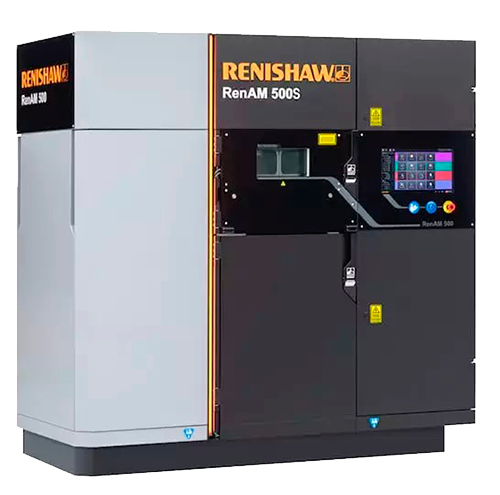
    Renishaw AM500S Flex

    The Renishaw AM500S Flex is made for industry 4.0 process methods with optical system control and system processes.

    Its 500 W laser enables exceptional precision for manufacturing components with > 99.9% density, maximum strength and ductility.

    Workload: The construction volume is 250x250x350mm

    Flexibility: The versatility of its design and the possibility of generating new process parameters make this equipment ideal for working with many different materials.
    Other materials

    In addition to Aluminium, we offer 3D printing with metal in the following materials. Take a look and decide which one best suits your needs.

    3D printing in steel

    3D printing in copper

    3D printing in Inconel

    Complementary services to the 3D printing process

    Design and
    engineering

    3D scanning
    of parts

    Post-processing